The Old Age Security (OAS) program is an important source of income for many Canadian seniors and retirees. It provides them with a regular monthly payment to help cover their basic expenses and maintain financial stability in retirement. However, the OAS benefit is not without its drawbacks, one of those being the clawback, or tax, that can be applied when recipients surpass a certain annual income threshold.
Knowing how the OAS clawback works can help you make informed decisions about your retirement savings and planning ahead so you don’t get caught off-guard by unexpected reduction of your OAS. Read on to learn more about what the OAS clawback is.
A tax called the Old Age Security (OAS) clawback, commonly referred to as “the OAS pension recovery tax“, is levied on those whose net yearly income exceeds a specific limit.
The cutoff point and threshold amounts differ year-to-year. Click here to see the latest threshold numbers.
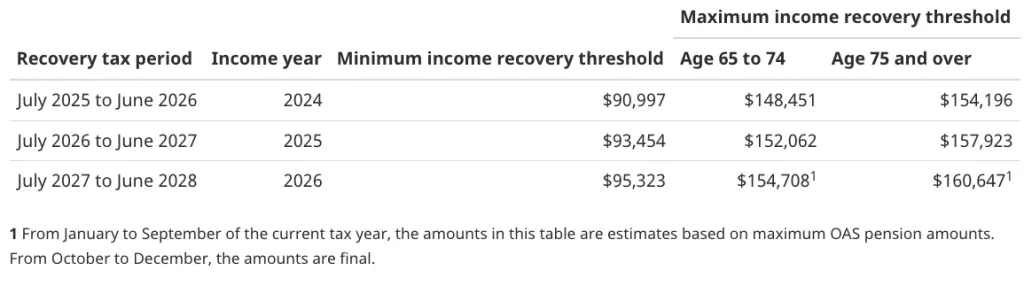
15% of the difference between the threshold amount and the individual’s actual income is the OAS clawback tax. This tax aids in preventing individuals who are capable of supporting themselves from receiving benefits to which they are not legally entitled and ensuring that only those who actually need the OAS pension receive it. As a result, the Canadian government will take a portion of the OAS pension from seniors with higher earnings.
Knowing how the OAS clawback works can help you plan ahead for retirement and make informed decisions about your savings and investments so you don’t get caught off-guard by unexpected taxes.
It’s important to remember that while the clawback may lower the amount of money you receive from OAS, you may still receive a portion of OAS.
If you have any questions about how to calculate or manage your OAS tax clawback, feel free to speak with a financial advisor by contacting us at Pension Solutions Canada.