If you’re planning to take the commuted value of your pension and are approaching the age to apply for Old Age Security (OAS), there’s an important tax trap you need to be aware of. While both options might seem appealing on the surface, taking the commuted value can seriously impact your OAS benefits.
In this guide, we’ll explain why commuted value and OAS don’t mix well, and how to avoid losing out on your OAS payments.
What Happens When You Take the Commuted Value?
When you take the commuted value of your pension, you get a lump sum that represents the present value of all your future pension payments. A portion of this will be transferred into a tax-deferred retirement account, a LIRA, but a significant chunk—often about one-third —comes to you in cash. That cash payout is considered taxable income in the year you receive it. Shelter as much as possible in your RRSP.
This can cause a spike in your taxable income for the year, pushing you into a higher tax bracket. For some retirees, this could mean paying more taxes than expected. But that’s not the only problem. Try to take the commuted value early in the year that you retire.
How Commuted Value Affects Your OAS Payments
Old Age Security (OAS) is a government benefit for Canadian seniors, designed to provide supplemental income in retirement. The amount you receive is based on your income, and if you earn too much, your OAS benefits may be “clawed back”—meaning you could lose part or all of your payments.
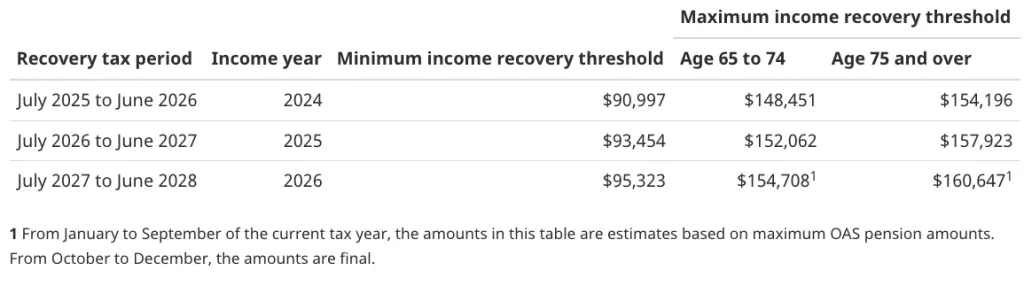
If you’re over the threshold amount in the year you apply for OAS, they start to claw back part of your OAS payments.
Click here to see the latest threshold numbers.
The Double Problem with OAS
The bad news doesn’t stop there. When you apply for OAS and trigger payments, two things happen:
- You lose the OAS benefit for that year
If your income is too high because of the commuted value payout, you could lose the entire OAS payment, which amounts to about $8,724 annually. For many retirees, this is a big financial hit. - You lose future OAS increases
OAS benefits increase every year you delay taking them—by about 7.2% per year, plus inflation. Once you trigger OAS, this annual increase stops, and your future payments are locked at the lower rate.
This means that not only do you lose OAS for the year you take the commuted value, but you also miss out on larger payments in the future.
How to Avoid the OAS Trap
If you’re considering taking the commuted value and you’re also eligible for OAS, it’s important to strategize your timing. Here are some tips to help you avoid losing your OAS benefits:
- Delay taking OAS
If you can, wait to apply for OAS until after you’ve received the commuted value payout and cleared the year with the large taxable income. Delaying OAS means you’ll not only avoid the clawback, but you’ll also benefit from the annual increase, which boosts your payments over time. - Plan your commuted value withdrawal carefully
Talk to a financial advisor about the best time to take your commuted value. If possible, try to stagger your retirement income so that you don’t receive a large cash payout in the same year that you apply for OAS. - Consider other sources of income
If you’re relying on OAS as part of your retirement plan, make sure you understand how other income sources, like the commuted value, will affect your overall tax situation. It might be worth deferring the commuted value or spreading out your withdrawals over multiple years.
Key Takeaway: Timing Is Everything
If you’re planning to take the commuted value of your pension, it’s essential to consider how this decision impacts your OAS. A large cash payout could push your income over the OAS clawback threshold, causing you to lose your OAS benefits and future increases. By planning the timing carefully and possibly delaying OAS, you can maximize your retirement income and avoid costly mistakes.
Before making any decisions, it’s always a good idea to consult with a financial advisor who can help you navigate the tax rules and ensure you’re making the most of your retirement savings.
FAQs About Commuted Value and OAS
What is the OAS clawback threshold?
The clawback starts when your income exceeds the threshold for that given year. Click here to see the latest threshold numbers. For every dollar over that amount, you lose 15 cents of OAS. Once your income hits the max threshold amount, your OAS is fully clawed back, and you won’t receive any payments.
How much do OAS payments increase if I delay them?
OAS payments increase by approximately 7.2% for every year you delay, plus inflation. This means if you wait a few years before applying for OAS, you could receive significantly higher monthly payments.
Will I pay taxes on the commuted value?
Yes. A portion of the commuted value will be taxable in the year you receive it. The exact amount depends on how much of the commuted value exceeds the maximum transfer value, which can be moved to a tax-deferred account. Transfer as much as possible to your RRSP.
Can I take OAS and the commuted value in the same year?
You can, but doing so may cause your OAS benefits to be clawed back if your income is too high. It’s generally not recommended to take both in the same year unless you’ve planned for the tax implications.
Should I delay OAS if I’m taking the commuted value?
Yes, it’s often a good idea to delay OAS until after you’ve received the commuted value to avoid triggering a clawback and missing out on future increases.